Is Beef Jerky Halal? Understanding Certification & Sourcing
For Muslim consumers and those seeking ethically sourced protein, halal certification matters. Beef jerky can be halal—but only when sourced, processed, and handled according to strict Islamic dietary laws. It is not just about the meat itself; it is about the entire supply chain, from the farm to the marinade to the dehydrator. This guide breaks down exactly what makes beef jerky halal, how to identify legitimately certified products, and why our Kochi-crafted jerky meets the highest ethical and religious standards.
Finding high-protein, travel-ready snacks that align with Islamic dietary restrictions has historically been frustrating in India. You either compromise on your macros by eating carb-heavy snacks, or you stare at the back of commercial meat packaging, trying to decipher complex chemical ingredients to ensure no haram elements are hidden inside. It is time to clear the smoke.
The Anatomy of Halal Meat: Beyond Just the Label
A common misconception is that “halal” simply means the absence of pork. That is only a fraction of the truth. Halal, translating to “permissible” in Arabic, dictates a comprehensive standard for animal welfare, the method of slaughter, and the processing of the meat.
For beef jerky to be classified as halal, the foundation must be Zabihah (the Islamic method of slaughter). This requires a swift, deep incision to the animal’s neck, severing the jugular veins and carotid arteries while leaving the spinal cord intact. This method ensures two vital things: the animal experiences minimal suffering, and the blood drains entirely from the carcass.
From a culinary and food-science perspective, the Zabihah method actually creates a superior baseline for jerky. Blood is a primary catalyst for bacterial growth. Because jerky is preserved through dehydration and low water activity, starting with meat that has been thoroughly drained of blood drastically reduces the risk of spoilage and creates a cleaner, purer flavor profile. The religious requirement directly enhances the scientific preservation of the meat.
The Showdown: Halal vs. Non-Halal Commercial Jerky
| Feature | Certified Halal Jerky | Standard Commercial Jerky |
|---|---|---|
| Meat Sourcing | Strictly Zabihah slaughtered, fully drained of blood. | Stunned/commercial slaughter, variable blood retention. |
| Marinades | 100% alcohol-free, certified vegetarian or halal ingredients. | Often uses cooking wines, mirin, or alcohol-brewed soy sauce. |
| Facility | Dedicated zero cross-contamination lines. | May process pork or non-halal meats on the same equipment. |
| Flavor Carriers | Plant-based or certified halal glycerin/extracts. | High risk of pork-derived glycerin or ethanol-based flavorings. |
Frequently Asked Questions on Halal Dietary Laws & Jerky
Is the red color inside the jerky residual blood?
No. Consuming flowing blood is haram, which is exactly why Zabihah is required. The red or pink hue you sometimes see in cured meat is a result of myoglobin (a protein in muscle tissue) reacting with smoke or natural curing salts. It is entirely safe and permissible.
Can I travel internationally with your Halal jerky?
Yes. Because our jerky is commercially dehydrated and vacuum-sealed, it meets the requirements for most international customs regarding shelf-stable, cooked meats. It is the ultimate high-protein travel companion for Muslim travelers navigating airports with limited halal options.
Do you make Halal Chicken Jerky?
Absolutely. Our chicken jerky follows the exact same rigorous Halal sourcing standards as our beef. You can read our deep-dive on poultry preservation in our guide: Chicken Jerky for Humans in India: Lean Protein Snacking.
Where to Find Authentic Halal Jerky in India
The days of importing overly preserved, stale jerky from the Middle East or Southeast Asia just to guarantee its halal status are over. We are crafting artisanal, small-batch, fully compliant jerky right here in Kerala, shipping nationwide.
Whether you need fuel for the gym, snacks for a road trip, or a clean protein source for your office desk, you should never have to second-guess what is in your food. Read the label, trust the process, and enjoy the meat.
Ready to upgrade your protein? Explore our complete range of Halal-Certified Beef and Chicken Jerky Products today.
The Hidden Haram: Why Marinades Matter
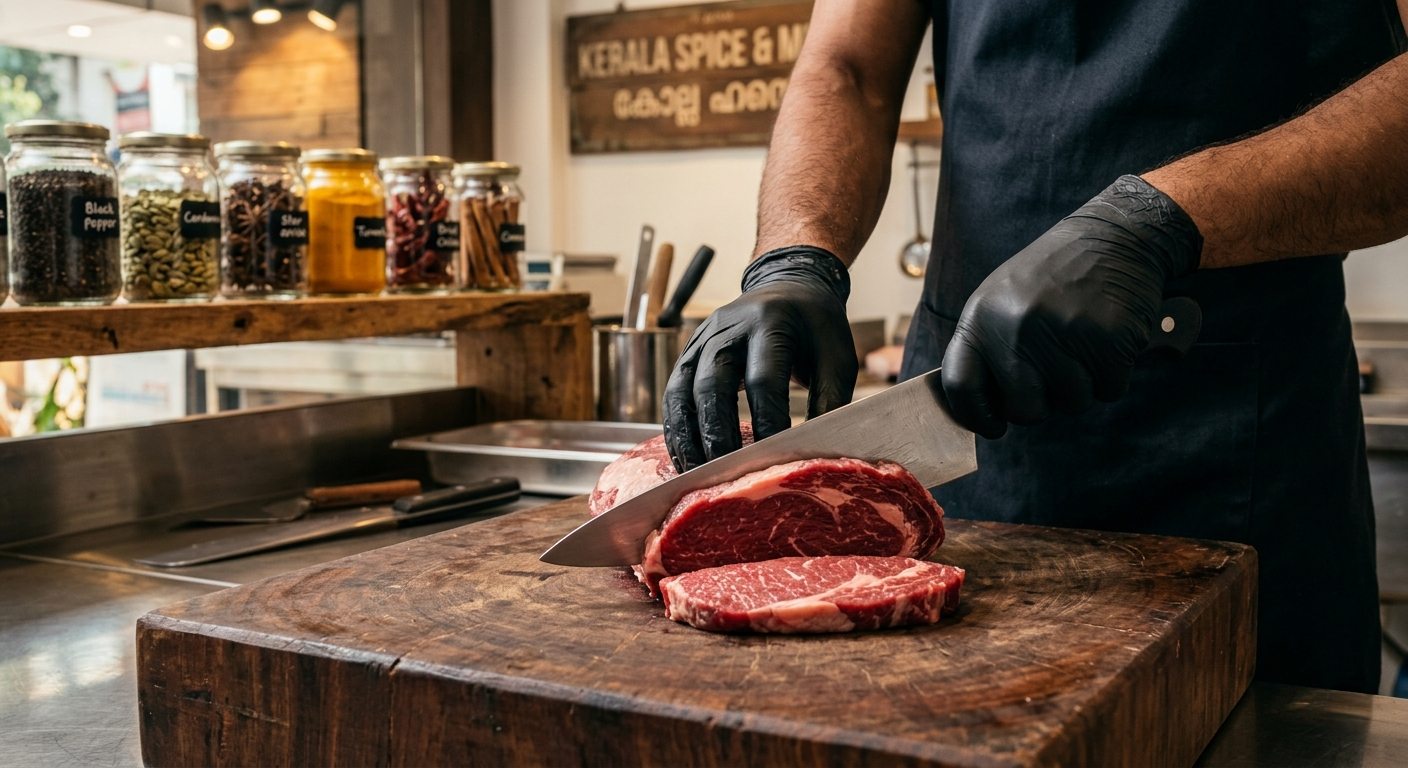
Securing Zabihah beef is only step one. The actual danger zone for Muslim consumers lies in the curing and flavoring process. Mass-produced, imported jerky brands routinely fail halal standards not because of the meat, but because of the marinade.
- Alcohol-Based Soy Sauces: Traditional Japanese soy sauces and certain teriyaki glazes are naturally brewed and often contain elevated levels of naturally occurring alcohol, or have alcohol added as a preservative. Halal jerky must use specifically formulated, alcohol-free soy or liquid aminos.
- Cooking Wines and Mirin: Many premium savory marinades use white wine vinegar, red wine reductions, or mirin (Japanese sweet rice wine) to tenderize the meat. These render the entire batch haram.
- Artificial Smoke and Flavor Carriers: Liquid smoke and artificial flavorings are often suspended in ethanol or animal-derived glycerin (often from pork). If a brand cannot provide a certificate for their flavoring agents, the final product cannot be trusted.
The Certification Process & Standards in India
In India, the intersection of FSSAI (Food Safety and Standards Authority of India) and Halal certification boards creates a rigorous auditing process. A legitimate Halal certification is not a one-time stamp; it is an ongoing audit of the entire supply chain.
Certifying bodies (such as Jamiat Ulama-i-Hind or Halal India) inspect the abattoirs to ensure the butchers are practicing Muslims adhering to the Tasmiyah (the dedication). They trace the cold-chain logistics to ensure the beef is never transported in the same trucks as pork products. Finally, they audit the manufacturing facility to guarantee there is zero cross-contamination with non-halal products on the slicing machines, marinating vats, or dehydration racks.
Kochi-Crafted: Our Uncompromising Sourcing Practices
Kerala has a rich, deeply ingrained culture of responsible meat consumption. When we set out to craft premium beef jerky in Kochi, compromising on sourcing was never an option. We built our production model around absolute transparency.
We source exclusively from certified, trusted local butchers who adhere strictly to Zabihah standards. We do not buy anonymous commercial frozen blocks of meat. We buy fresh, highly specific, lean cuts (like the round or silverside) directly from verified suppliers in the region.
Our marinades are built from scratch. We use raw Indian spices, sea salt, FSSAI-approved alcohol-free soy variants, and natural wood smoke. Our facility processes only halal-certified meats, eliminating the risk of cross-contamination entirely. When you open a bag of our jerky, you are holding a product that honors both culinary excellence and Islamic dietary law.