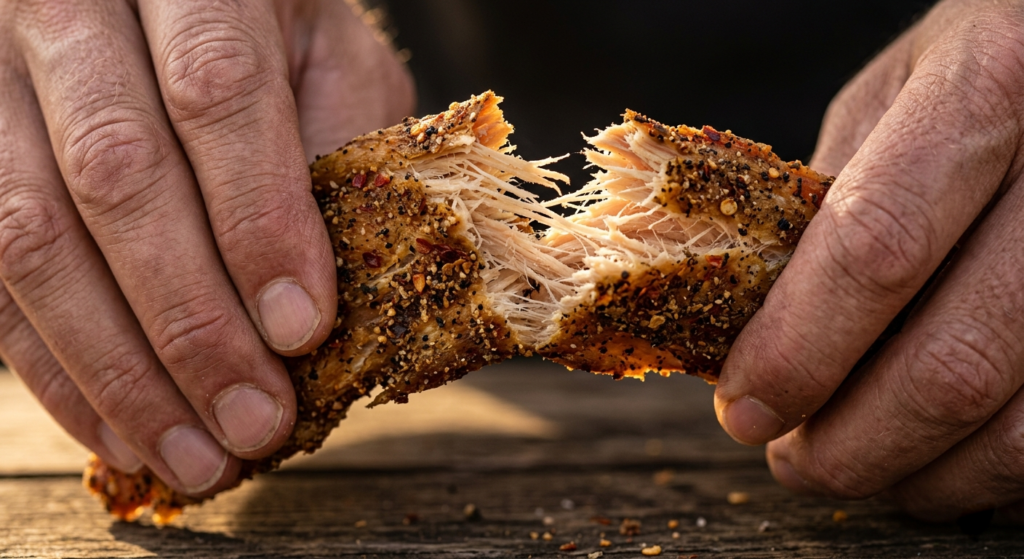
Chicken Jerky for Humans in India: Lean Protein Snacking
Walk into any gym, corporate office, or airport terminal in India, and you will see people pulling out the same tired snacks to hit their macros: chalky whey protein bars, foil-wrapped boiled eggs, or roasted makhana that does absolutely nothing for muscle recovery. For a country that consumes poultry in staggering volumes—where tandoori, tikka, and kebabs are practically cultural institutions—we have historically been terrible at making chicken portable.
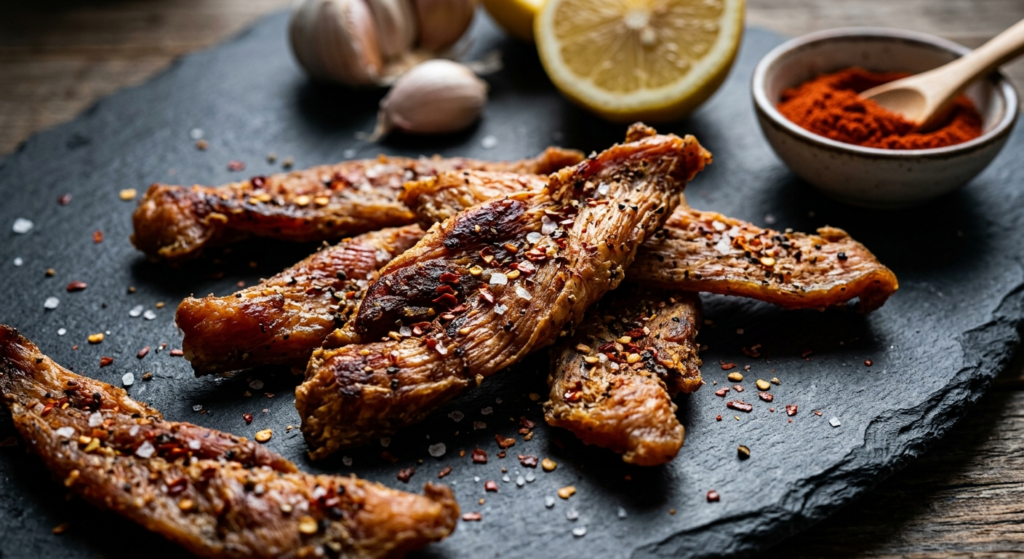
Until chicken jerky arrived.
If you associate jerky strictly with beef, or worse, with pet food, it is time to update your pantry. Chicken jerky formulated for human consumption is rapidly becoming the sharpest nutritional tool in the Indian fitness diet. It is pure, dehydrated muscle. No cheap soy isolate, no binders, and no hidden date-syrup sugars masquerading as health food.
Here is exactly what human-grade chicken jerky is, why it destroys traditional sweet protein bars on a macro level, and the precise food science that makes it safe, shelf-stable, and intensely flavorful.
The Elephant in the Room: Yes, It’s for Humans
If you associate jerky strictly with beef, or worse, with pet food, it is time to update your pantrLet’s address the algorithm problem first. If you search for “chicken jerky in India” online, the first page of results will almost exclusively bombard you with dog treats.
The pet food industry co-opted dehydrated chicken years ago because it is a cheap, shelf-stable protein. However, pet-grade jerky is manufactured with a completely different set of priorities. It often utilizes meat by-products, lacks any seasoning or marinades, and heavily relies on cheap vegetable glycerin to keep the meat artificially soft and chewy for canine teeth.
Human-grade chicken jerky is an entirely different species of food.
Premium brands start with 100% free-range, Halal-certified whole chicken breast—the leanest, most premium cut available. The meat is meticulously trimmed of all visible fat, sliced paper-thin, and submerged in complex, chef-driven marinades. The salt content, the spice blends, and the hygiene protocols are engineered strictly for the human palate and FSSAI compliance.
If a bag doesn’t explicitly state it is crafted for human consumption, leave it on the shelf.
(Looking for the right stuff? Shop our collection of Premium Human-Grade Chicken Jerky Products)
The Macro Math: Why Athletes Are Making the Switch
The Indian fitness and wellness market is currently saturated with “protein snacks” that are essentially candy bars in disguise. A standard commercial protein bar in India weighs roughly 50 grams, yields about 12 to 15 grams of protein, and packs over 200 calories loaded with dates, honey, jaggery, or artificial sweeteners to mask the taste of the whey powder.
Chicken jerky strips that ratio down to the bone.
When you dehydrate chicken breast, you are forcefully extracting the water weight—which accounts for roughly 75% of raw poultry. What remains is a highly concentrated, dense matrix of pure muscle tissue.
Look at the math on a standard 16-gram serving of premium chicken jerky:
Protein: 10g to 11g
Calories: 58 to 65 kcal
Fat: Less than 1.5g
Added Sugar: 0g
This translates to a staggering metric: over 60% of every calorie you consume from chicken jerky comes directly from bioavailable protein. It boasts a perfect 1.0 PDCAAS (Protein Digestibility-Corrected Amino Acid Score), meaning your body absorbs and utilizes the protein with maximum efficiency, far outperforming plant-based protein blends.
Furthermore, it alters how your brain processes hunger. Because jerky contains zero sugar and requires heavy, sustained chewing, it does not spike your insulin. Instead, it triggers high satiety signals in the brain. A handful of chicken jerky will keep you comfortably full for three to four hours, compared to the 90-minute sugar crash you inevitably get from a sweet protein bar.
How It’s Made: The Dehydration Protocol
Making raw poultry shelf-stable at room temperature without pumping it full of chemical preservatives requires precise biochemical engineering. You cannot just leave raw chicken in a warm oven and hope for the best. Here is the anatomy of the process.
1. The Cut and Trim
It starts exclusively with skinless chicken breast. Dark meat (thighs, legs, and wings) is completely useless for jerky. Dark meat contains higher levels of intramuscular fat. Fat cannot be dehydrated; if left on the meat, it will oxidize and go rancid at room temperature. The breast must be ruthlessly trimmed of all fat caps and connective tissue.
2. The Cure and Osmosis
The lean meat is sliced against the grain to ensure a clean snap when bitten. It is then dropped into a wet cure. A proper jerky marinade uses salt as a functional, structural ingredient—not just a flavoring agent. Salt initiates a process called osmosis, aggressively pulling moisture out of the cellular walls of the meat. Natural acids in the marinade (like apple cider vinegar, citrus juice, or soy) help to break down and tenderize the tough muscle fibers.
3. Thermal Lethality and Dehydration
The marinated strips are laid flat on commercial stainless-steel racks and placed in high-airflow dehydrators. The temperature must be strictly controlled, generally resting between 65°C and 75°C (150°F to 165°F). This creates a “thermal lethality” zone. It is hot enough to instantly kill raw-poultry pathogens like Salmonella and E. coli, but low enough to gently extract internal moisture without cooking the meat into a brittle, unchewable rock.
4. The Yield Ratio
It takes roughly three to four kilograms of raw chicken breast to yield just one single kilogram of finished jerky. That intense concentration is exactly what you are paying for when you buy a bag.
Flavor Profiles Engineered for the Indian Palate
Wood-Smoked Original:
Built for purists. The chicken takes on a deep, savory, campfire profile, usually rounded out with garlic, onion powder, and a heavy hit of umami from soy sauce or liquid aminos.
The Heat (Peri-Peri / Bhut Jolokia):
Dehydration naturally intensifies spice. Capsaicin concentrates as the water evaporates. Spicy chicken jerky doesn’t just burn the tongue; it builds a slow, rolling, highly addictive heat in the back of the throat.
(Wondering which flavor suits your palate? Compare our top sellers in the Chicken Jerky Flavor Guide).
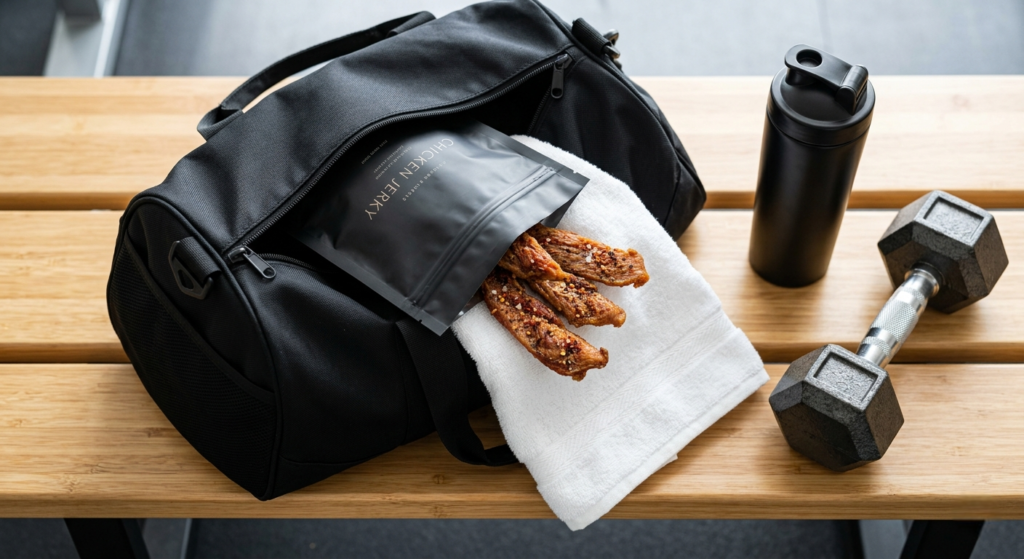
Real-World Applications: Where Chicken Jerky Shines
1. The Himalayan Trekker
If you are hiking in high altitudes—whether it’s the Annapurna circuit or a quick weekend trek in the Western Ghats—weight is your enemy. Canned tuna is heavy and requires a tin opener. Hard-boiled eggs crush easily and spoil fast. Chicken jerky provides maximum protein density at practically zero carry-weight, requiring no prep, no water, and no fire.
2. The Desk-Bound Professional
The 4:00 PM office slump usually leads to ordering a pastry or opening a bag of fried potato chips. Keeping a sealed bag of savory chicken jerky in your desk drawer provides a savory, crunchy alternative that hits your protein goals without the carb coma that follows junk food.
3. The Keto and Low-Carb Adherent
Finding a savory snack that has literally zero carbohydrates and zero sugar is notoriously difficult. Because premium chicken jerky relies entirely on meat and spices, it keeps your body squarely in a state of ketosis while providing enough sodium to stave off the dreaded “keto flu.”
Frequently Asked Questions
Is chicken jerky safe to eat right out of the bag?
Absolutely. It is not raw meat. The commercial dehydration and smoking process fully cures and cooks the meat through a tightly controlled combination of salt, low heat, and time. It is completely safe and ready to eat immediately.
How long does it last in humid Indian weather?
Food spoilage requires water. Properly manufactured chicken jerky has a “water activity” (Aw) level well below 0.85. At this level, it is biologically impossible for mold or bacteria to grow. An unopened, vacuum-sealed bag can sit in a dark pantry for up to a year. However, once you open the seal, ambient humidity (especially in coastal cities like Mumbai or Kochi) can reintroduce moisture to the meat. Once opened, eat it within three days or store the remainder in the refrigerator.
Is Chicken Jerky Halal?
This depends entirely on the manufacturer. Look for brands that explicitly source from certified Halal local suppliers. Because the curing process does not inherently require alcohol-based marinades, premium Indian jerky brands can easily maintain strict, 100% Halal certification. (Learn more in our Complete Guide to Halal Cured Meats).
The Verdict
We need to stop pretending that sugary date bars and heavily processed whey crisps are the only ways to consume protein on the move. Chicken jerky takes the most trusted, universally accepted lean meat in India and transforms it into something weightless, shelf-stable, and intensely flavorful.
If you are serious about your nutrition, your macros, and your time, leave the dog-food aisle behind. It is time to upgrade your snack game.