Beef Jerky vs. Unakka Irachi:
Bridging Traditions
The Core Content:
Kerala possesses a rich heritage of meat preservation, most notably Unakka Irachi (sun-dried beef). While both jerky and Unakka Irachi share the fundamental goal of moisture removal, the execution and final culinary application are entirely distinct.
Unakka Irachi is typically heavily salted, sun-dried in open air, and requires rehydration or frying before consumption as part of a larger meal. Beef jerky, conversely, is a ready-to-eat snack. Jerky is cured in liquid marinades, slow-cooked in controlled dehydrators rather than open sunlight, and optimized for immediate consumption. Kochin Jerky Co bridges these two worlds: honoring the Keralite tradition of spiced meats while delivering the modern, macro-friendly convenience of Western-style jerky.
Beef Jerky vs. Kerala Unakka Irachi: Tradition Meets Modernity
Kerala’s unakka irachi represents centuries of culinary wisdom. Beef jerky—a modern global snack—borrows from the exact same primal preservation principles. Yet, they diverge sharply in technique, flavor, and how they fit into our daily lives. This comparison explores how traditional Kerala dried meat and modern artisan jerky each hold a distinct, powerful place in India’s protein story.
If you grew up in a traditional Kerala household, the scent of unakka irachi is permanently wired into your memory. It is the sharp, deeply savory aroma of meat, rock salt, and spices baking under a brutal tropical sun. Long before refrigeration existed, humanity survived by mastering the alchemy of dehydration. Today, while we no longer need to dry meat to survive a monsoon, we still crave that intense, concentrated flavor. But how does our ancestral staple compare to the modern phenomenon of beef jerky?
What is Unakka Irachi? (The Original Kerala Dried Meat)
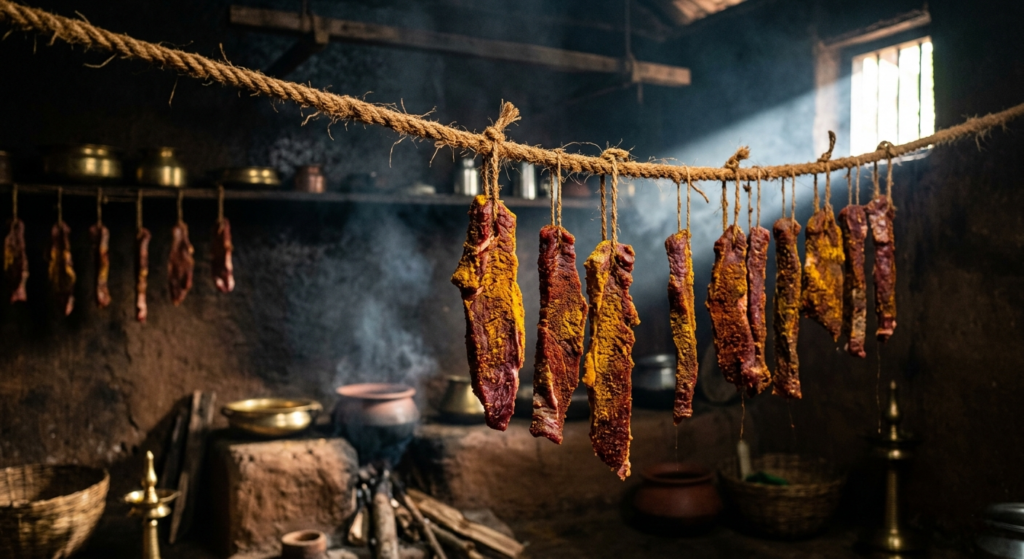
Unakka irachi translates literally to “dried meat” in Malayalam. It is not a ready-to-eat snack; it is a raw ingredient engineered for extreme longevity. Thick strips of beef are heavily crusted in a thick paste of turmeric, chili powder, black pepper, and coarse sea salt. These strips are then strung up on coir ropes under the blistering sun for several days until they turn into dark, rock-hard shards of preserved protein.
Its creation was born out of absolute necessity. The Malabar coast experiences some of the fiercest monsoons in the world. For the Syrian Christian and Mappila communities, cattle were valuable. When an animal was slaughtered, nothing could be wasted, and the meat had to be preserved to last through the long, wet months when fishing and foraging were impossible.
The salt drew out the moisture, the turmeric acted as a natural antimicrobial agent, and the sun baked away the remaining water. The result was a culinary vault—locking in the meat’s nutritional value for months, waiting to be unlocked by heat and coconut oil.
Preparation Methods: Sun & Stone vs. Smoke & Precision
While both unakka irachi and modern beef jerky share the ultimate goal of dehydration, their paths to getting there are entirely different, resulting in fundamentally different foods.
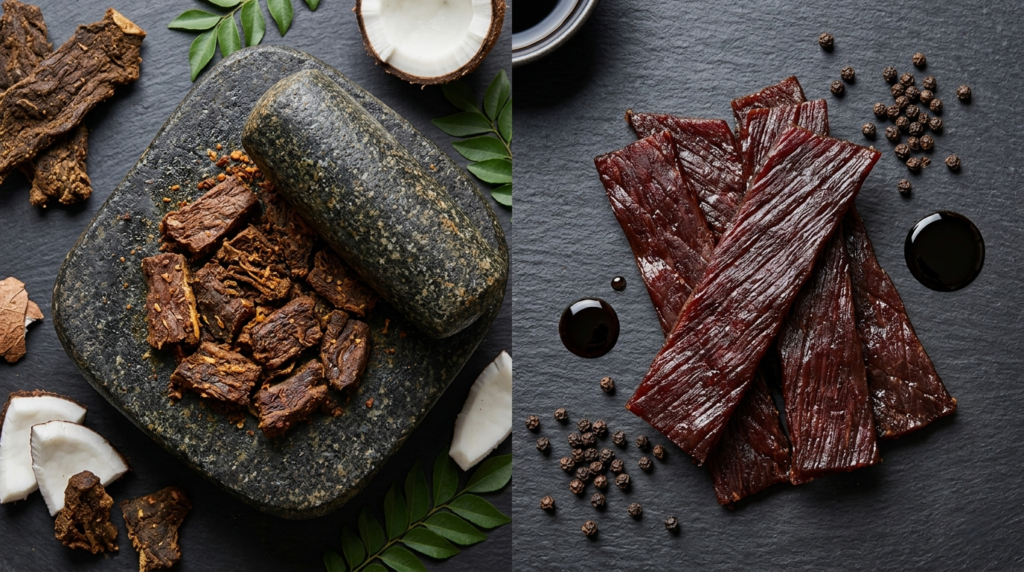
The Traditional Method: Unakka irachi is largely at the mercy of the elements. It relies on ambient heat and airflow. Because it is dried outdoors, the heavy spice rub serves a dual purpose: flavoring the meat and protecting it from insects and bacteria during the open-air drying process.
The Modern Jerky Method: Artisan beef jerky is a masterclass in controlled food science. Instead of a dry spice crust, jerky is submerged in a liquid osmotic marinade—often featuring soy sauce, apple cider vinegar, or natural smoke extracts. The meat is dehydrated in commercial ovens with precise, sweeping airflow at exact temperatures (usually around 70°C). This ensures uniform “thermal lethality” (killing pathogens) while keeping the muscle fibers pliable.
Taste & Texture: The Ingredient vs. The Snack
You cannot open a jar of authentic unakka irachi and take a bite. It will break your teeth. It is an ingredient that demands labor. To eat it, it must be rehydrated, or more traditionally, crushed into coarse fibers using a heavy stone mortar and pestle (an ammi kallu). It is then shallow-fried with sliced coconut (thenga kothu), shallots, and curry leaves to create idi irachi. It is fiery, dense, and serves as an aggressively savory side dish to rice or tapioca (kappa).
Beef jerky, on the other hand, is engineered for immediate consumption. It is sliced thinner and against the grain. The marinades contain humectants that trap just enough microscopic moisture to keep the meat chewable. When you bite into premium jerky, it offers a satisfying resistance that gives way cleanly, releasing a complex profile of woodsmoke, savory umami, and targeted spices. It is portable, zero-prep, and immediately rewarding.
The Nutritional Divide: Coconut Oil vs. Pure Macros
Both meats begin as high-protein, lean cuts of beef. But how they end up on your palate dictates their nutritional footprint.
Because unakka irachi requires heavy oil to become edible—typically deep or shallow-fried in copious amounts of coconut oil—it transforms into a calorie-dense, high-fat dish. It is magnificent comfort food, but it is not something a modern athlete wants to eat post-workout.
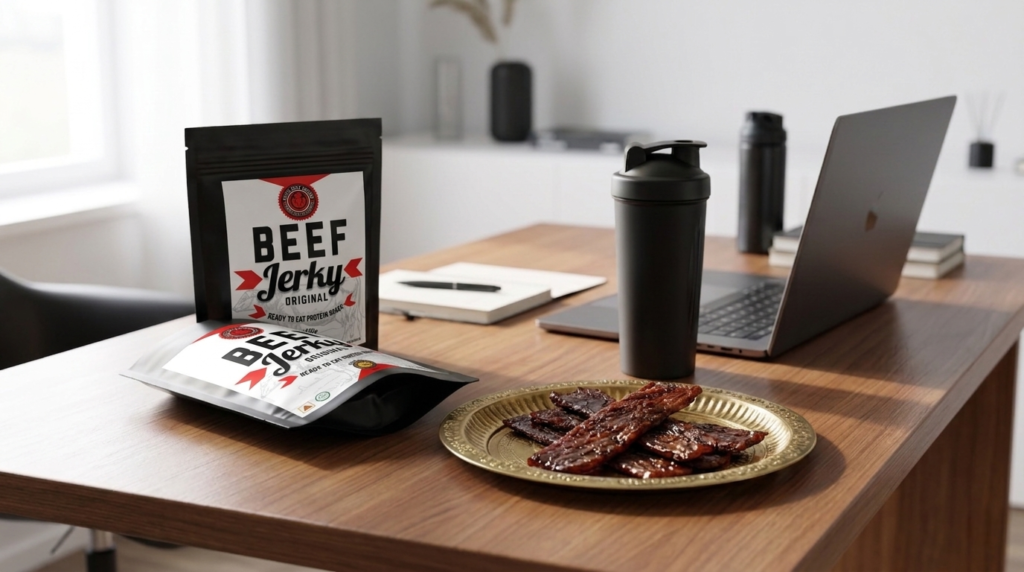
Beef jerky retains its pure macronutrient profile from start to finish. Because it requires zero oil and is cured via dehydration, a single handful delivers massive amounts of bioavailable protein with almost negligible fat. It is the ultimate lean fuel for the modern fitness enthusiast, desk worker, or traveler. (Want to dive deeper into the macros of jerky? Read our guide: What is Beef Jerky? Complete Guide for Indian Foodies).
Cultural Preservation Through Modern Evolution
Adopting beef jerky does not mean abandoning unakka irachi. The two exist for entirely different moments in a food lover’s life. Unakka irachi is slow food. It is Sunday afternoons, nostalgia, and the comforting weight of a traditional Kerala meal.
Beef jerky is the evolution of that exact same preservation instinct, streamlined for a world that moves faster. It honors the primal human desire for cured, spiced meat, but packages it for a gym bag instead of a stone mortar.
We don’t have to choose between our heritage and our modern nutritional needs. We can celebrate the rich history of Kerala’s dried meats at the dinner table, and rely on the precision of premium artisan jerky everywhere else.
Experience the modern standard of preserved meat. Shop our Premium Halal Beef Jerky Collection today.