What is Beef Jerky?
The Anatomy of a Premium Snack
The Core Content:
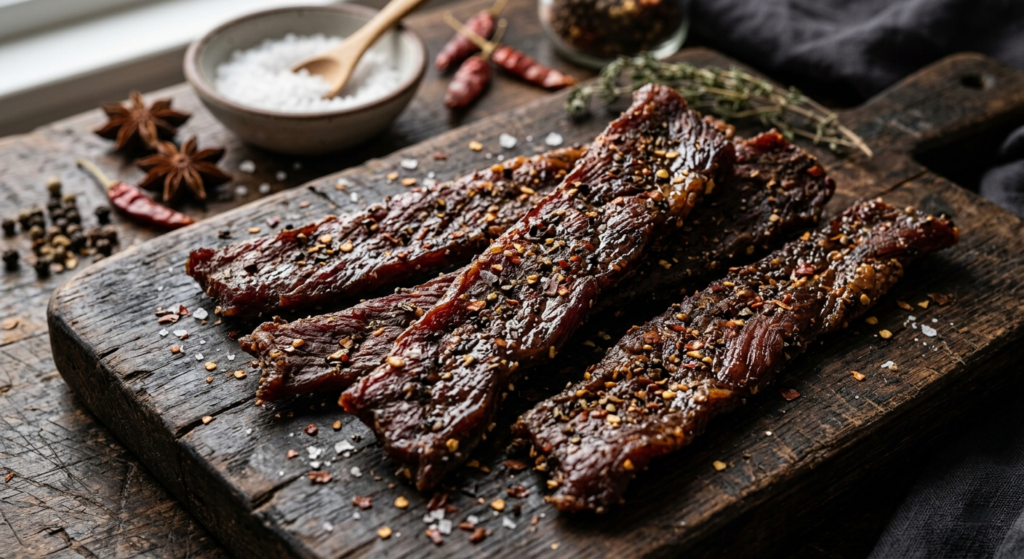
Beef jerky is not merely dried meat; it is the culinary science of moisture reduction paired with flavor preservation. At its core, jerky is created by meticulously trimming lean cuts of beef to remove all perishable fats, marinating the meat in a highly calibrated blend of spices and curing agents, and slowly dehydrating it at precise temperatures.
This process yields a product that is exceptionally dense in bioavailable protein, shelf-stable without refrigeration, and intensely flavorful. Unlike heavily processed modern snacks, true artisan jerky honors an ancient method of food preservation, elevated by modern food safety standards and gourmet flavor profiling.
If you grew up in a meat-loving Indian household—particularly in regions like Kerala, Goa, or the Northeast—you already understand the primal appeal of preserved, spiced meat. You know the dark, caramelized edges of a slow-roasted beef fry, or the intense, concentrated flavor of sun-dried cuts hanging in the summer heat.
But as global food culture becomes increasingly accessible, a different kind of preserved meat is making its way into Indian gym bags, office desks, and road-trip backpacks: beef jerky.
At first glance, jerky might just look like a dried piece of meat. But structurally, nutritionally, and historically, it is a marvel of culinary engineering. For the Indian palate, which is practically built to appreciate bold spices and complex umami, premium beef jerky is a natural evolution in snacking.
Here is exactly what beef jerky is, how it compares to our own traditional dried meats, and why it deserves a permanent spot in your pantry.
The Anatomy of Jerky: Not Just “Dried Meat”
To understand beef jerky, you have to look at what it isn’t. Jerky is not raw meat, but it isn’t exactly cooked in the traditional sense, either.
Beef jerky is lean muscle meat that has been stripped of its fat, marinated in a curing solution, and slowly dehydrated at low temperatures. The goal is to remove moisture—the primary catalyst for bacterial growth—while locking in the protein structure and flavor.
Jerky vs. The Rest of the Cured Meat World:
Biltong: Often confused with jerky, this South African staple is cured with vinegar, left whole to air-dry in ambient temperatures, and sliced after drying. Jerky is sliced before drying and relies on heat (usually smoking or low-temp dehydration).
Prosciutto / Parma Ham: These are raw, fatty cuts dry-cured with salt over months or years. They are delicate and require specific storage. Jerky is virtually indestructible and heavily spiced.
Pemmican: A Native American survival food made by pounding dried meat into a powder and mixing it with rendered fat and berries.
Jerky stands alone as a high-protein, zero-prep, shelf-stable snack that you can tear into with your teeth.
From the Andes to the Supermarket: A Brief History
The word “jerky” sounds distinctly Western, but its etymology traces back to the Quechua empire in the Andes mountains of South America. The indigenous tribes used the word ch’arki, which translates simply to “dried, salted meat.”
Before refrigeration, if a hunter took down an alpaca or a llama, the meat had to be preserved immediately to survive the brutal winters. The meat was de-boned, sliced thin, rubbed with salt, and left to dry in the freezing, thin mountain air, or smoked over fires.
When Spanish conquistadors arrived, they noted the efficiency of ch’arki and adopted the process, eventually bringing it to North America. The cowboys, pioneers, and native tribes of the American West adapted the method for beef, bison, and elk. Today, the process has moved from campfire smoke to precision-controlled dehydrators, but the foundational alchemy of meat, salt, and time remains unchanged.
Traditional vs. Modern Jerky (And the Unakka Irachi Connection)
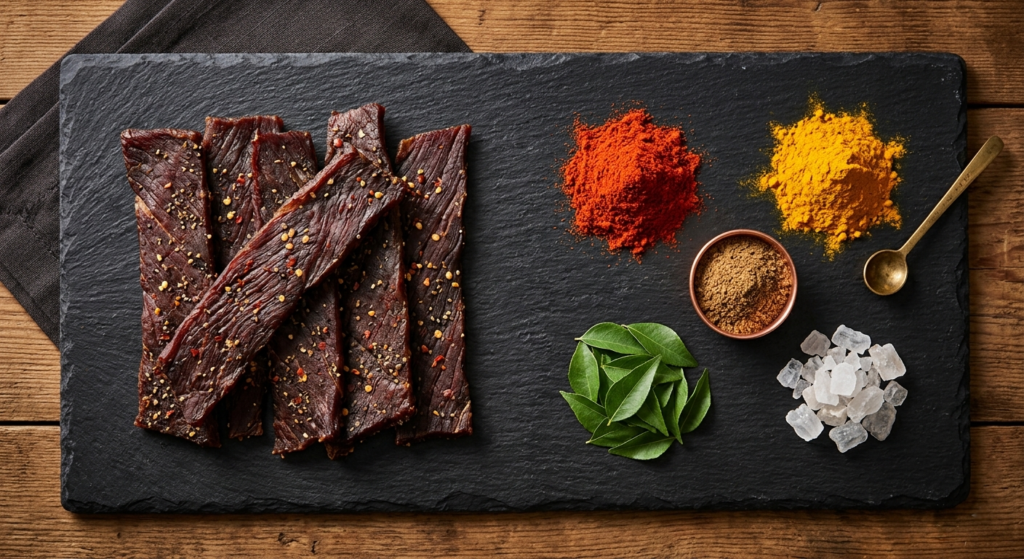
For a Malayali or a South Indian meat lover, the concept of drying beef is hardly revolutionary. The closest indigenous parallel we have to beef jerky is Unakka Irachi (sun-dried beef). But the preparation, texture, and end-use of these two meats are fundamentally different.
The Unakka Irachi Method
Traditional Kerala unakka irachi is a method of preservation meant for later cooking. Strips of beef are heavily coated in turmeric, chili powder, and rock salt, then strung up under the blistering tropical sun until they turn into dark, rock-hard shards. You cannot (and should not) eat raw unakka irachi. It has to be rehydrated, crushed on a stone mortar, and shallow-fried with coconut slices (thenga kothu), shallots, and curry leaves. It is a dense, fiery side dish for rice or tapioca. (For a deep dive into traditional Indian dried meats, check out our Guide to Unakka Irachi).
The Modern Jerky Method
Modern beef jerky is a ready-to-eat snack. The dehydration process is tightly controlled—usually between 60°C and 70°C (140°F–160°F). This temperature is high enough to kill pathogens but low enough to dry the meat without turning it into a brittle roast. Furthermore, modern jerky uses marinades rich in humectants (like soy sauce or honey) which keep the meat pliable and chewable straight out of the bag.
Where unakka irachi is a cooking ingredient, beef jerky is the main event.
The Nutritional Profile: Why Athletes Swear By It
There is a reason beef jerky has transitioned from a cowboy staple to a staple of cross-fitters, weightlifters, and keto-diet adherents. It is, quite literally, concentrated fuel.
When you remove the water from beef (which makes up about 75% of its weight), what remains is a dense matrix of muscle tissue. This means the macro-nutrients are drastically magnified per gram.
A standard 100g serving of premium beef jerky
typically yields:
Calories: 300–400 (depending on the sugar in the marinade)
Protein: 30g – 40g
Fat: 4g – 7g
Carbohydrates: 4g – 10g
The Protein-to-Weight Ratio
To get 35 grams of protein, you would need to eat a rather large, heavy chicken breast. Alternatively, you can eat a handful of lightweight, highly portable jerky. Furthermore, beef provides a complete amino acid profile, rich in bioavailable iron, zinc, and Vitamin B12, which are crucial for muscle recovery and cognitive function.
A note on fat: You will notice premium jerky is very low in fat. This is intentional. Fat does not dehydrate; it oxidizes and goes rancid. The best jerky makers meticulously trim away connective tissue and fat caps, leaving only lean muscle.
(Looking to hit your daily macros? Browse our collection of High-Protein Beef Jerky Products crafted for fitness enthusiasts).
How It’s Made: The Science of Sourcing, Marinating, and Smoking
Making great jerky is an exercise in culinary restraint and biochemical precision. Here is how premium brands turn a raw roast into a shelf-stable delicacy.
1. Sourcing the Right Cut
You cannot make good jerky out of a ribeye or a brisket. The high fat content that makes those cuts great for grilling ruins them for drying. Master jerky makers use lean, heavily exercised cuts from the hindquarters of the cow—primarily the Top Round, Bottom Round, or Silverside.
2. The Cut: With or Against the Grain?
The way the knife hits the meat dictates the final texture. Slicing with the grain (parallel to the muscle fibers) results in a tough, chewy jerky that takes a while to break down in the mouth. Slicing against the grain (perpendicular to the fibers) creates a softer, more tender jerky that snaps cleanly when you bite it.
3. The Marinade (Osmosis in Action)
Marinades do more than impart flavor; they preserve. A proper jerky marinade requires a balance of elements:
Salt: The non-negotiable base. Salt draws out the water from the meat cells through osmosis, lowering the “water activity” (Aw) to a level where bacteria cannot survive.
Acid: Vinegar, citrus, or Worcestershire sauce tenderize the muscle fibers.
Umami: Soy sauce, liquid aminos, or fermented fish sauces deepen the inherent savoriness of the beef.
Sugar: Brown sugar, honey, or maple syrup round out the harshness of the salt and help create a slightly sticky, caramelized exterior during drying.
4. Dehydration and Smoking
The marinated strips are laid out on racks and subjected to low, steady heat with high airflow. Commercial makers use industrial dehydrators that perfectly circulate warm air for 4 to 12 hours. Traditionalists will put the meat in a smoker, using woods like hickory, applewood, or mesquite. The smoke acts as a natural antimicrobial agent while layering the meat with complex, phenolic flavor compounds.
Taste & Flavor Profiles
If your only experience with jerky is cheap, mass-produced gas station brands, you are missing out. Artisan jerky has a flavor architecture as complex as good wine or single-origin coffee.
The Texture:
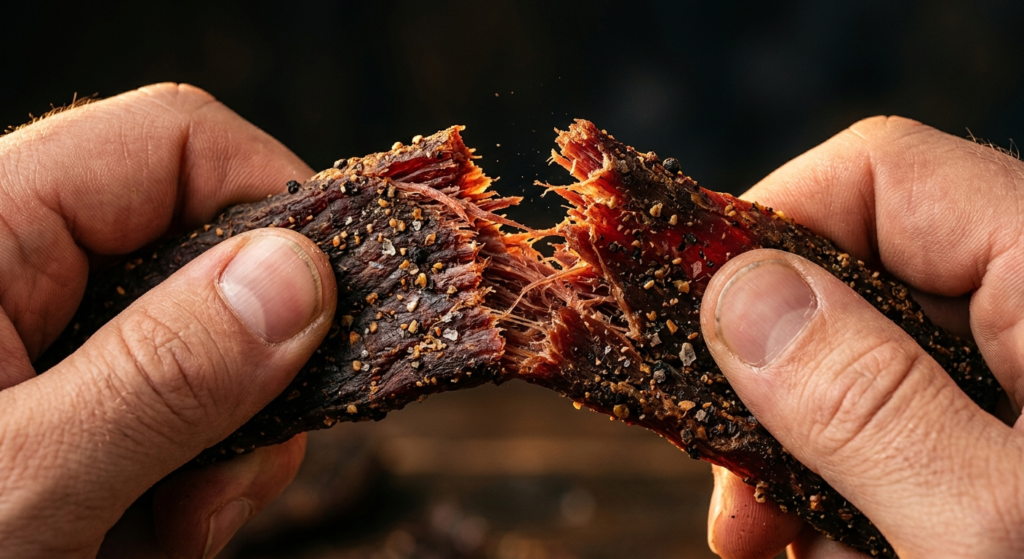
A quality piece of jerky should offer resistance, but it shouldn’t feel like chewing on shoe leather. It should yield to your teeth, breaking down slowly and releasing its juices and spices the longer you chew.
The Classic (Original):
Dominant notes of cracked black pepper, woodsmoke, and a deep, beefy savoriness enhanced by soy sauce.
The Heat (Spicy):
For the Indian foodie, this is where jerky shines. Look for jerky dusted with ghost pepper (Bhut Jolokia), habanero, or heavy red chili flakes. The dehydration process concentrates the capsaicin, leading to a slow-building, intense burn.
The Sweet & Savory:
Sweet barbecue jerky offers a brilliant contrast. The sugars caramelize during the drying process, creating a slightly sticky exterior that gives way to salty meat inside.
Frequently Asked Questions
Is beef jerky shelf-stable in Indian weather?
Yes. Properly dried and sealed jerky has a water activity level below 0.85, making it impossible for mold or bacteria to grow, even at room temperature. An unopened bag can last a year. Once opened, it should be consumed within a week or kept in the fridge to maintain maximum freshness, especially in highly humid coastal Indian climates.
Is beef jerky Halal?
Jerky itself is just a method of preparation, so its Halal status depends entirely on the sourcing of the beef and the ingredients in the marinade. There are many premium jerky producers who use strictly certified Halal, Zabihah beef, ensuring no alcohol-based flavorings are used in the curing process. (For a deeper understanding of our sourcing, read our Complete Guide to Halal Cured Meats).
Is jerky highly processed?
Mass-produced commercial jerky often contains artificial preservatives like sodium erythorbate or heavy doses of sodium nitrite to maintain a bright red color. However, high-quality, artisanal jerky uses only whole-food ingredients: beef, salt, spices, and natural smoke. Always read the label—if it reads like a recipe rather than a chemistry set, you’re holding a premium product.
The Verdict
Beef jerky bridges the gap between ancient survival techniques and modern nutritional needs. For the Indian food lover accustomed to robust spices and the ritual of eating well, artisan jerky offers a sensory experience unlike any other snack. It is tough, intensely flavorful, unapologetically meaty, and ready to travel wherever you go.